
Hire Slow, Fire Slow, Regret Both
The real cost isn't a bad hire—it's keeping them. (And the stories you're telling yourself to avoid the obvious.) Go Go Captain™ Notes — Dec 26, 2025

The conventional wisdom is “hire slow, fire fast.”
Most leaders get the first part right—sometimes too right, paralyzed by the fear of a bad hire like it’s a tattoo of an ex’s name.
But almost everyone fails on the second part.
We fire slow. Too slow. Embarrassingly slow.
And it costs more than we realize.
Let me tell you about the most expensive lesson I learned in leadership. Buckle up. This one’s going to sting.
The Hidden Cost
A few years ago, I had someone on my team who wasn’t performing.
Not terribly—just... not well.
Missed deadlines. Mediocre work. The kind of underperformance that’s hard to point to because there’s no single fireable offense. Death by a thousand paper cuts. Each one too small to act on, all of them together slowly bleeding you out.
I told myself stories.
They’re going through a hard time.
They have potential.
They’ll turn it around.
Maybe the problem is me.
I gave feedback. I created improvement plans. I moved them to different projects like rearranging deck chairs on the Titanic.
Months passed. Nothing changed.
And during that time:
My top performers picked up the slack—and grew resentful. They didn’t sign up to carry someone else’s weight. Every time they watched me give another chance, they wondered why their excellence wasn’t being protected the way this person’s mediocrity was.
The team’s standard of “acceptable” drifted down. When you tolerate B-minus work, B-minus becomes the ceiling. Your A-players start questioning why they’re killing themselves when coasting is clearly fine.
I spent hours in coaching conversations that went nowhere. Same feedback. Same nodding. Same promises. Same results. I wasn’t coaching—I was performing patience for an audience of one: myself.
Everyone knew the situation—and wondered why leadership tolerated it. Teams aren’t stupid. They see everything. And when they see you avoiding the obvious, they stop trusting your judgment on everything else.
One of my best people left, citing “culture issues” in their exit interview. That’s corporate-speak for “you let mediocrity win and I’m not staying to watch.”
The Math Nobody Does
Here’s what the cost of a bad hire actually looks like:
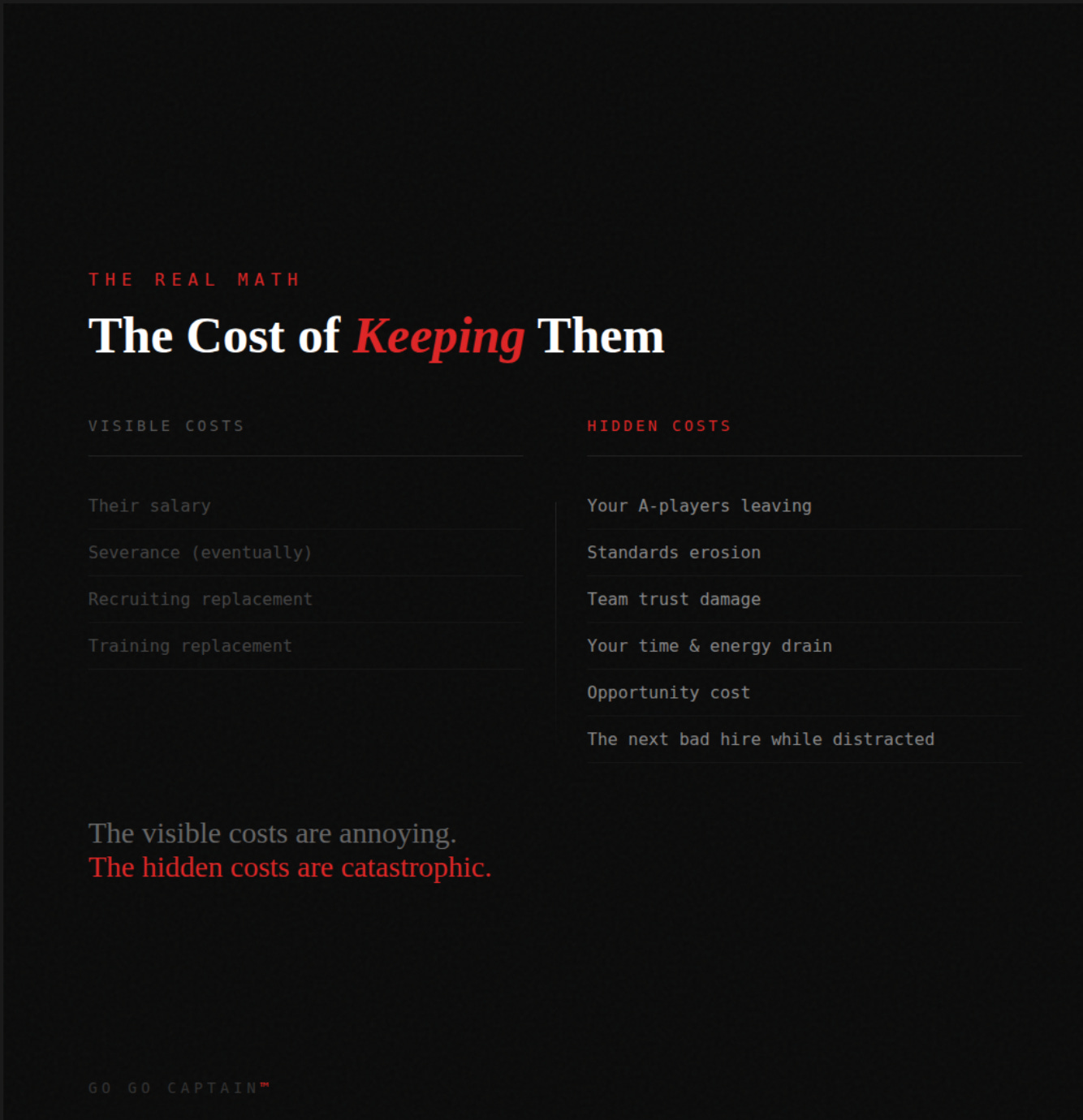
Visible CostsHidden CostsTheir salaryYour A-players leavingSeverance (eventually)Standards erosionRecruiting replacementTeam trust damageTraining replacementYour time and energyOpportunity cost of what you could’ve builtThe next bad hire you make while distracted
The visible costs are annoying.
The hidden costs are catastrophic.
One underperformer kept six months too long can cost you two top performers, a year of momentum, and your reputation as someone who holds the line.
But sure, let’s give them one more quarter to “turn it around.”
Why We Fire Slow
Let’s be honest about what’s really happening here. Because it’s not noble. It’s not kind. It’s avoidance wearing a compassion costume.
We want to be “fair.”
We tell ourselves everyone deserves a chance. Multiple chances. Infinite chances. A chance factory that never closes.
But here’s the uncomfortable math: fairness to one underperformer often means unfairness to everyone else carrying the weight.
When you give unlimited grace to someone who isn’t delivering, you’re taking it from everyone who is.
We’re afraid of being wrong.
What if they turn it around next month? What if I’m the problem? What if I haven’t given them enough support?
The uncertainty keeps us in holding patterns. But here’s the thing about holding patterns: they burn fuel without getting you anywhere. And eventually, you run out.
We avoid hard conversations.
This is the same dynamic I wrote about in “The Lie of the Open Door Policy.” Avoidance masquerading as patience. Conflict aversion dressed up as giving people room to grow.
You’re not being patient. You’re being scared.
We conflate liking someone with needing them.
Good people can be wrong for a role. Someone you’d grab a beer with can still be tanking your team’s output. Someone who makes the Slack channel fun can still be the reason your best people are updating their LinkedIn.
Liking someone is not a business case for keeping them.
We’re protecting ourselves from feeling like the bad guy.
Let’s just say it: firing someone feels bad. It makes you the villain in someone else’s story. And nobody wants to be the villain.
So we delay. We create one more improvement plan. We give one more “final” warning. We wait for them to quit so we don’t have to pull the trigger.
That’s not leadership. That’s cowardice with a HR process attached.
The Mercy of Clean Cuts
Here’s what I’ve learned—and it took me way too long to learn it:
Letting someone go can be the kindest thing you do. For them and for you.
That person I kept too long? After I finally let them go, they went to a different company, in a different role, and thrived.
The job wasn’t right for them. I knew it. They knew it. But neither of us was brave enough to act on that knowledge.
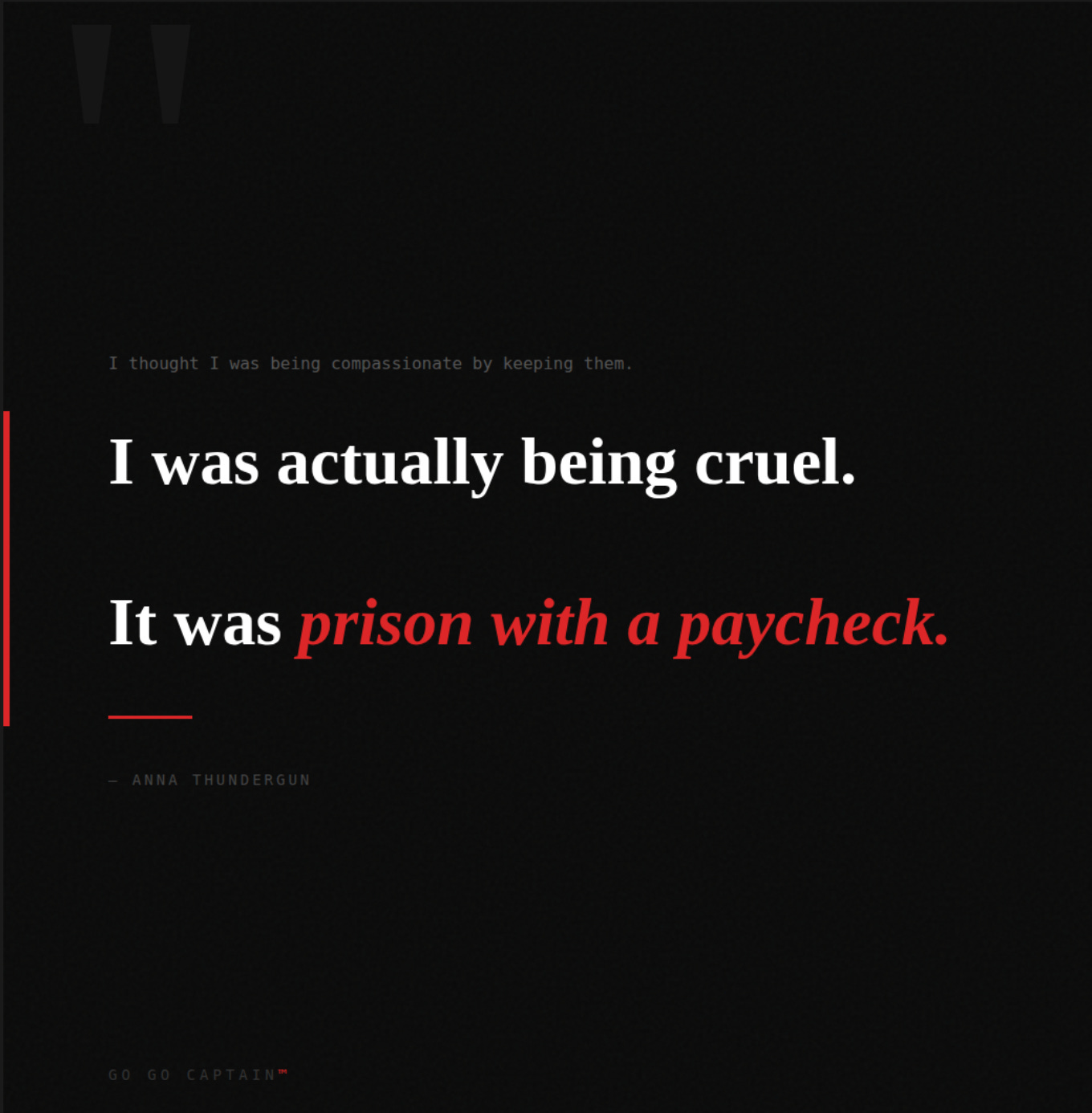
I thought I was being compassionate by keeping them.
I was actually being cruel.
Every day they stayed in a role where they were failing was a day they weren’t moving toward something that fit them better. Every meeting where they felt inadequate. Every performance review that confirmed what they already feared. Every morning they woke up with that pit in their stomach.
I called that kindness.
It was prison with a paycheck.
Osho said: “The moment you become aware of the ego, it disappears. Awareness is enough.”
The same is true here. The moment you become honest about what’s actually happening—not the story, the reality—the path becomes obvious. The only question is whether you have the courage to walk it.
The Diagnostic
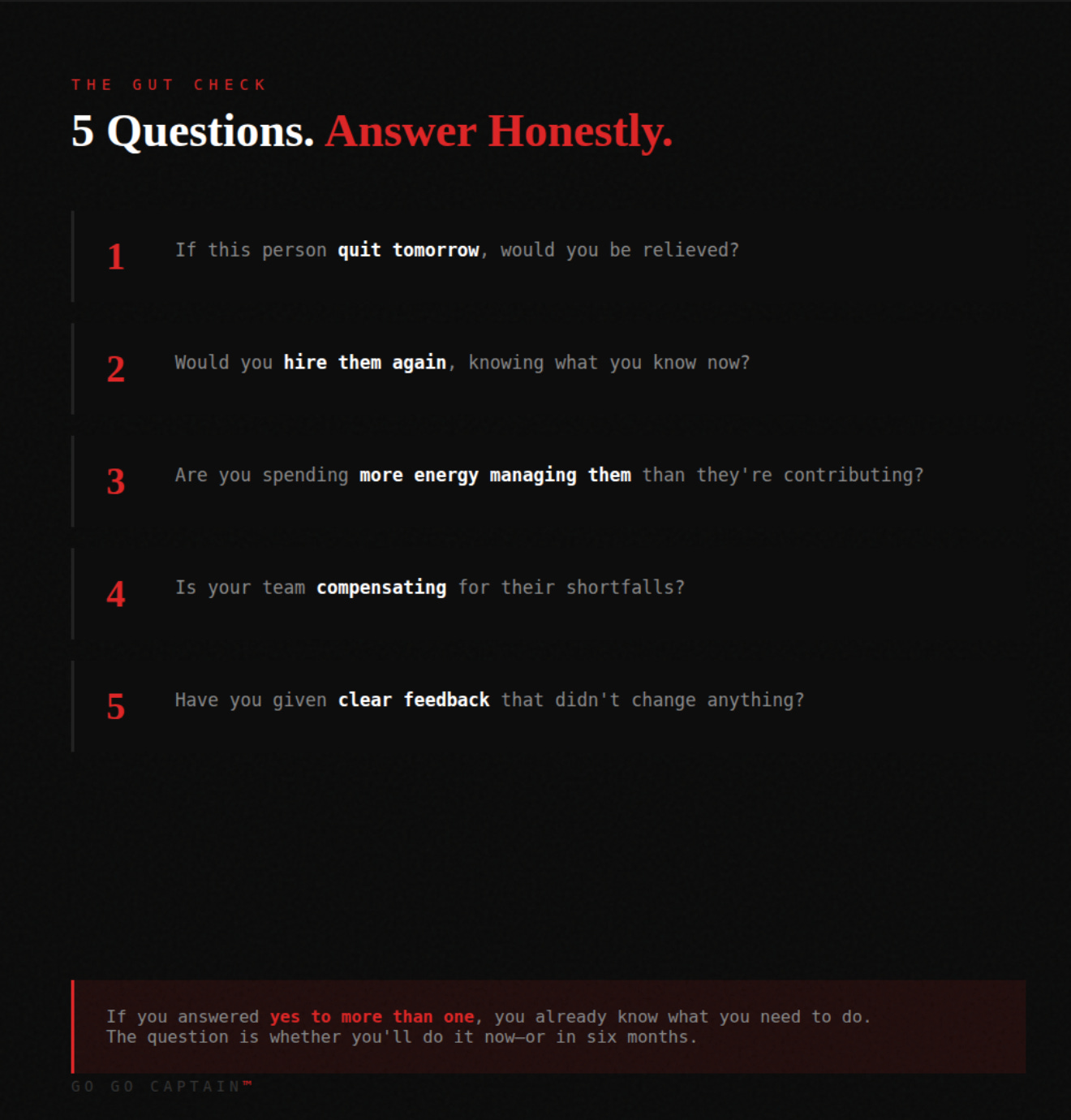
Ask yourself these questions. Answer honestly. No one’s watching.
1. If this person quit tomorrow, would you be relieved?
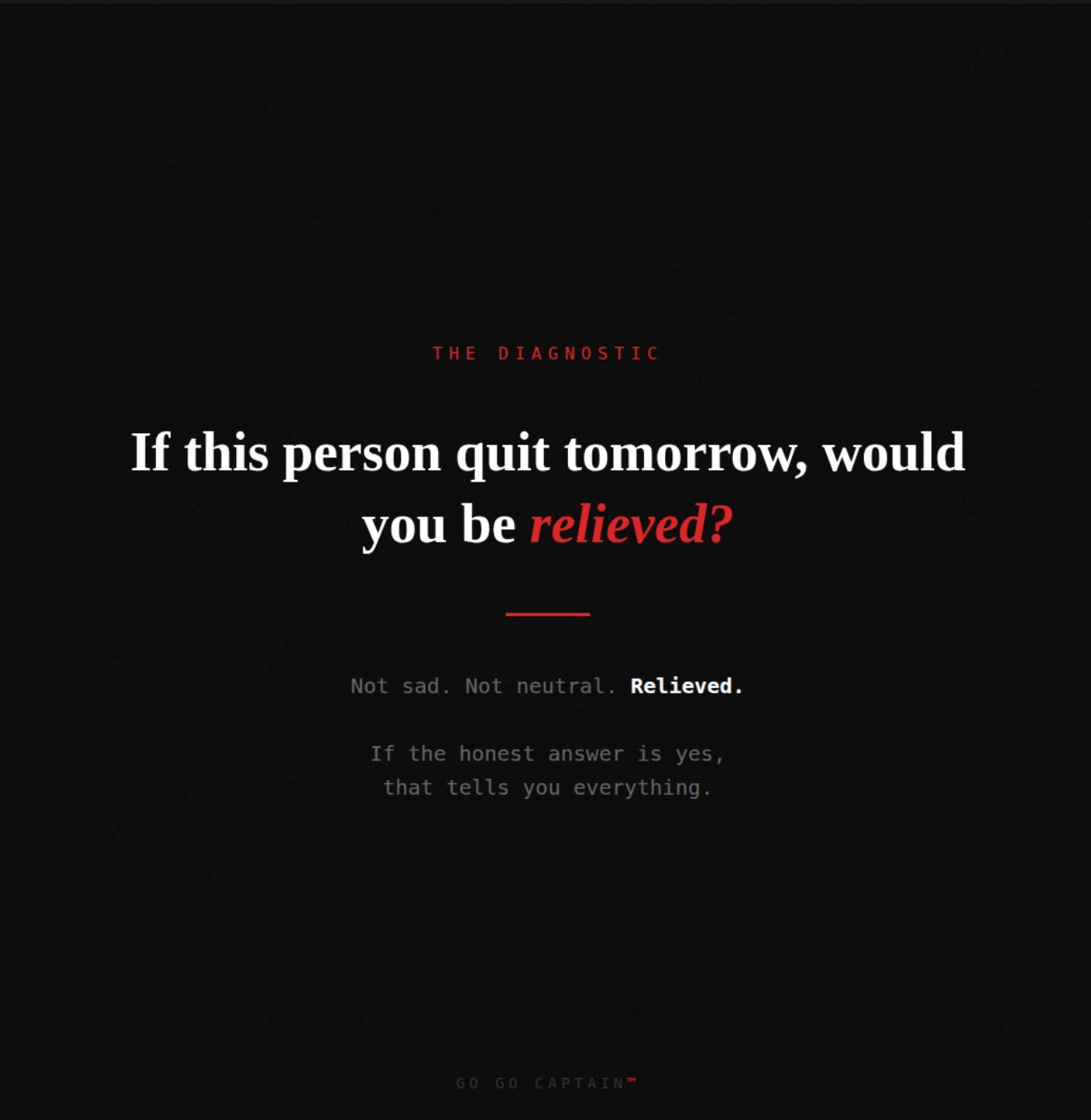
Not sad. Not neutral. Relieved.
If the honest answer is yes, that tells you everything.
2. Would you hire them again, knowing what you know now?
Not “would you give them a chance.” Would you actively choose them over other candidates?
If you’re hesitating, you have your answer.
3. Are you spending more energy managing them than they’re contributing?
Add up the hours. The conversations. The worrying. The cleanup.
Now compare that to what they’re actually producing.
If the ratio is upside down, it’s not going to flip.
4. Is your team compensating for their shortfalls?
Are your good people doing their job AND covering for this person?
Because that’s not sustainable. And they know it. They’re just waiting to see if you know it too.
5. Have you already given feedback that didn’t change anything?
Not once. Multiple times. Clear feedback. Specific feedback.
If the pattern hasn’t changed after clear communication, the pattern isn’t going to change.
The Timeline of Denial
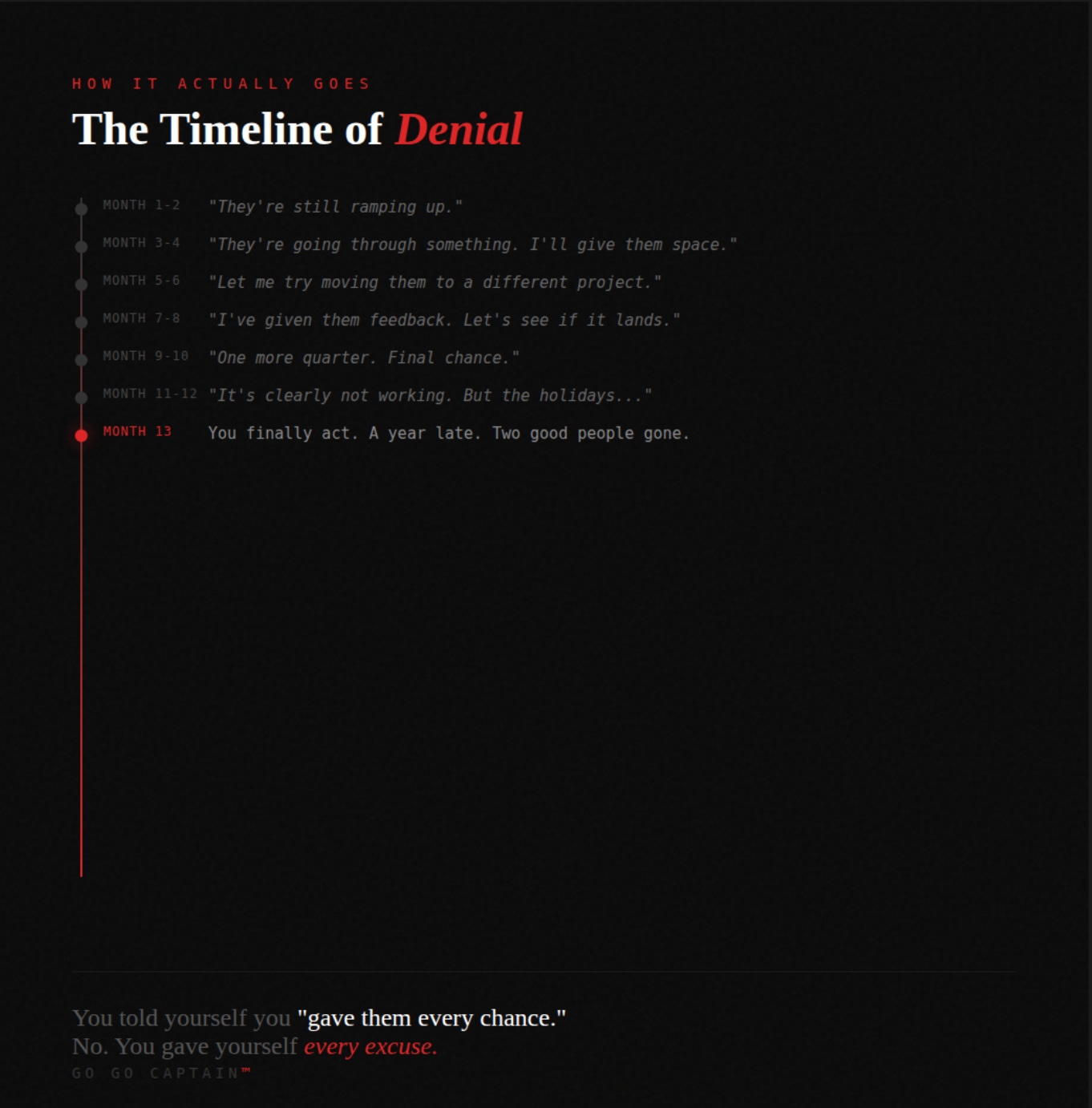
Here’s how it usually goes:
Month 1-2: “They’re still ramping up.”
Month 3-4: “They’re going through something. I’ll give them space.”
Month 5-6: “Let me try moving them to a different project.”
Month 7-8: “I’ve given them feedback. Let’s see if it lands.”
Month 9-10: “One more quarter. Final chance.”
Month 11-12: “Okay, it’s clearly not working. But the holidays are coming...”
Month 13: You finally act. A year late. Two good people gone. Standards in the basement. Trust eroded.
And you tell yourself you “gave them every chance.”
No. You gave yourself every excuse.
How to Actually Do It
When it’s time—and you already know if it’s time—here’s the move:
Be direct. Don’t hide behind HR language or performance improvement theater. “This isn’t working, and we both know it. Here’s what happens next.”
Be fast. Once you’ve decided, act within days, not weeks. The longer you wait after deciding, the more it corrodes everything.
Be generous. Severance. References. Help with the transition. You can be firm and kind at the same time. This isn’t revenge—it’s redirection.
Be honest with yourself about why you waited. Not so you can beat yourself up. So you don’t do it again.
The Reframe
Here’s the truth nobody wants to say out loud:
Keeping someone in a role where they’re failing isn’t kind. It’s avoidance disguised as compassion.
Every day they stay is a day they’re not moving toward something that fits them better.
Every day you wait is a day your team loses a little more faith in your judgment.
The kindest thing you can do for someone struggling in a role is help them find a role where they won’t struggle.
Sometimes that’s in your organization.
Usually it isn’t.
Either way, the delay isn’t helping anyone.
It’s just making you feel better about yourself while everything burns in slow motion.
The Bottom Line
Hire slow. Yes.
Fire slow? That’s not wisdom. That’s fear.
And fear is expensive.
The cost of a bad hire isn’t their salary.
It’s the talent that leaves. The standards that erode. The trust that breaks when your team watches you tolerate what everyone knows shouldn’t be tolerated.
The question isn’t whether you should act.
The question is whether you’ll do it now—or in six months, after more damage is done.
You already know the answer.
The only question is whether you’re brave enough to admit it.
If this hit close to home, forward it to a leader who’s been “giving someone more time” for six months too long. Sometimes the kindest thing is naming what’s actually happening.
And if you’re the person being kept in a role that isn’t working, you deserve to know too. The delay isn’t protecting you. It’s trapping you.