

THE STRATEGIES EXTRACTED
STRATEGY 1: Platform Arbitrage
What Gary Vaynerchuk Did: Identified Youtube in 2006 as an underpriced attention channel. Created 1,000+ episodes of Wine Library TV while the platform was still emerging.
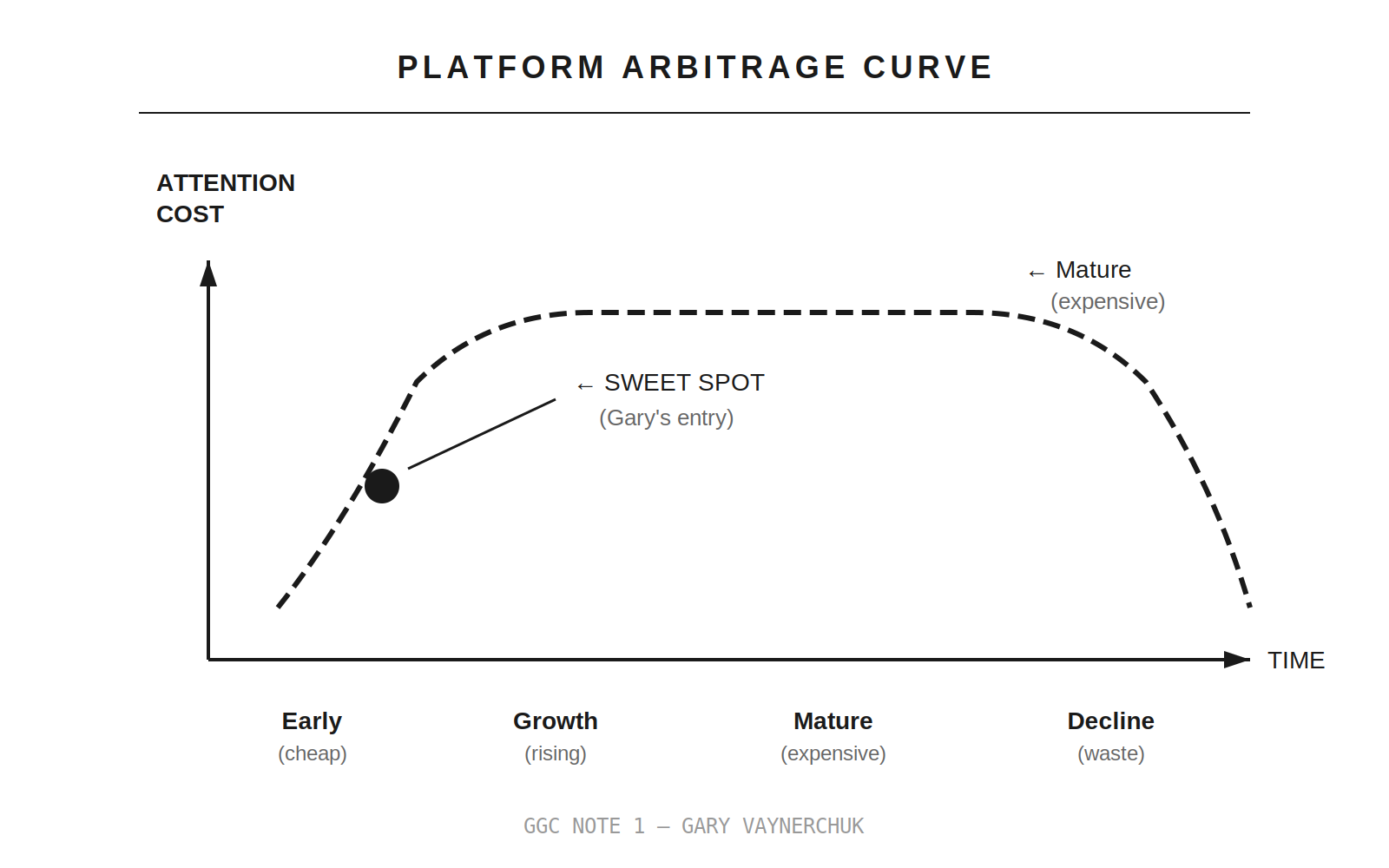
The Principle: Attention has a cost. New platforms offer attention at a lower cost than mature platforms. Early consistent presence compounds.
My Take?
Most people wait until a platform is “proven” before committing. By then, the arbitrage is gone. The question isn’t “is this platform legitimate?”
The question is, what’s the cost of attention here versus elsewhere?
LinkedIn in 2024-2025 is where YouTube was in 2008. Threads is where Twitter was in 2010. The window opens, then closes.
YOUR TEST
Identify one platform where you have presence but haven’t committed
For the next 14 days, post daily (even if imperfect)
Track: engagement rate, follower growth, time invested
Calculate your “attention cost” = time invested ÷ meaningful engagements
Report back: What was your attention cost? Did consistency change anything by day 10?
STRATEGY 2: Document, Don’t Create
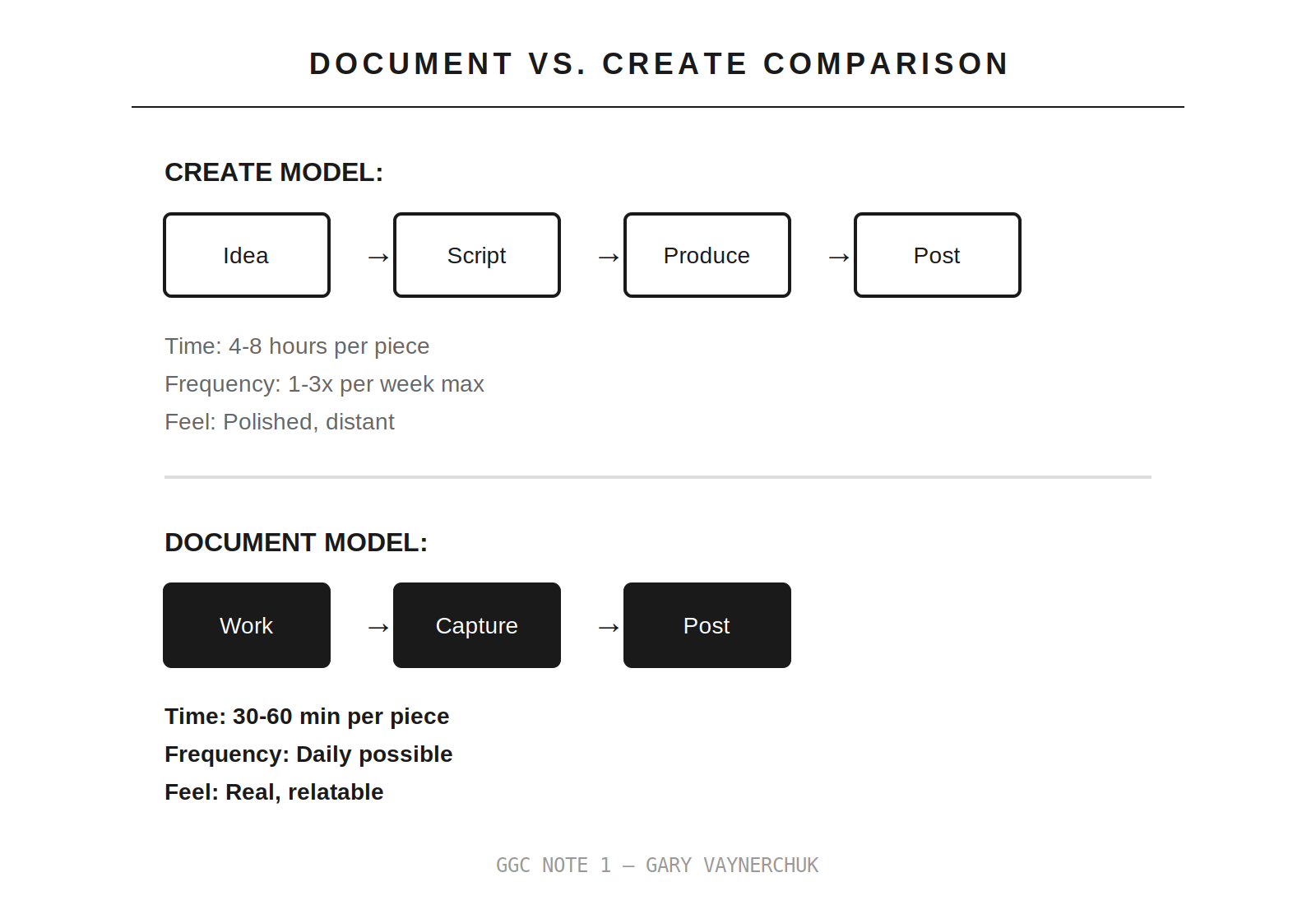
What Gary Vaynerchuk Did: Instead of scripting content, he filmed real work, real conversations, real decisions. The documentation became the content.
The Principle: Authenticity scales better than production. People follow journeys, not just destinations.
My Take?
Leadership isn’t performed—it’s practiced. When you document instead of create, you’re showing the practice. You’re inviting people into the process, not just presenting outcomes.
The teams I’ve worked with respond better to “here’s what I’m figuring out” than “here’s what I’ve figured out.” Documentation builds trust because it shows the mess.
YOUR TEST:
This week, capture ONE real moment from your work (a decision, a challenge, a win, a mistake)
Write it up in under 300 words—what happened, what you thought, what you learned
Post it without over-editing (Tag me; I want to support you!)
Notice: How does engagement compare to your “polished” content?
Report back: Was the documentation easier or harder than you expected? How did your audience respond?
STRATEGY 3: Accumulation Cycles
What Gary Vaynerchuk Father Did: Saved every dime for years. Didn’t spend. Accumulated until he could acquire.
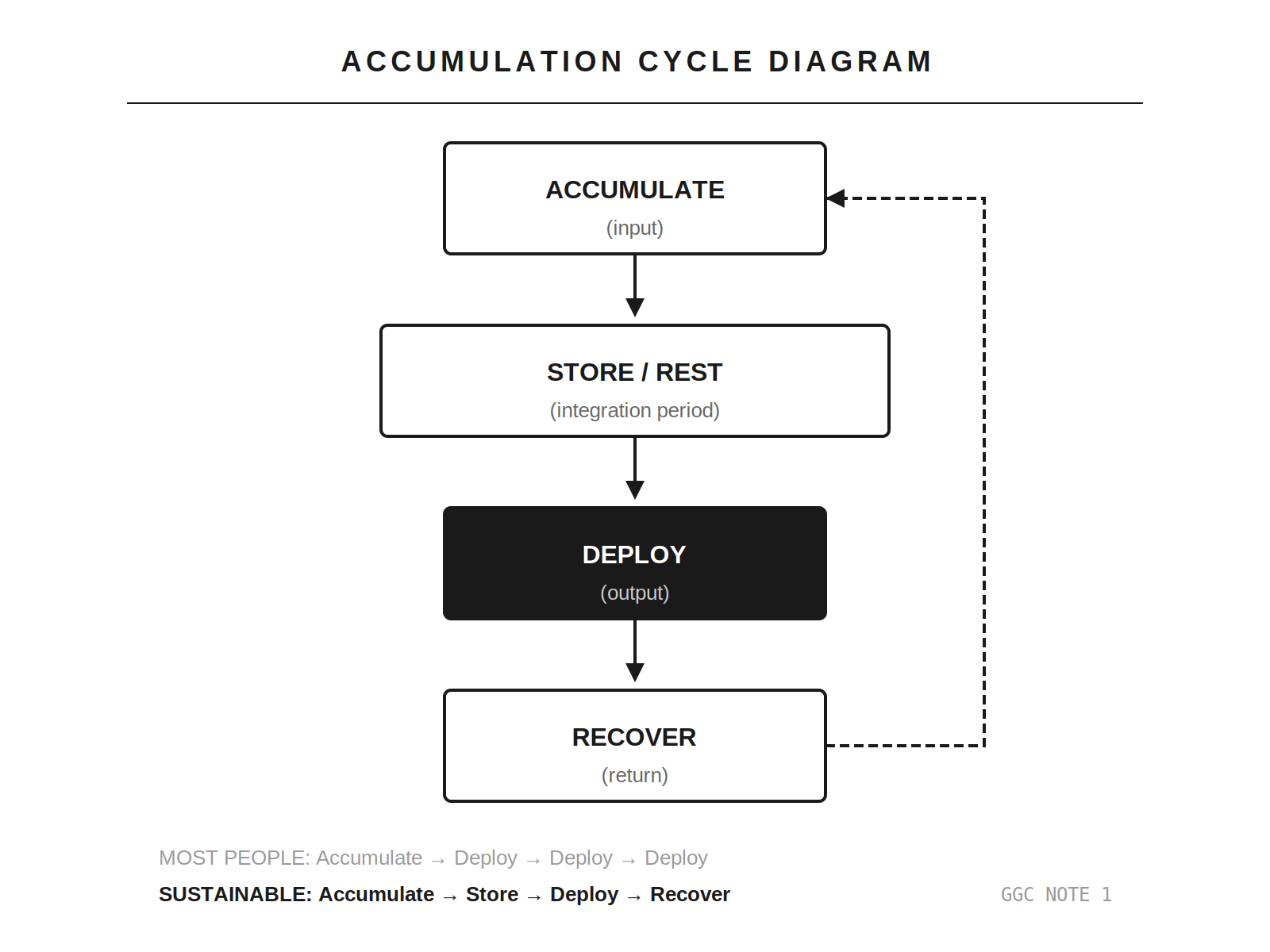
The Principle: Expenditure without accumulation depletes. Sustainable output requires input cycles.
My Take?
We’ve been taught that rest is the absence of productivity. It’s not. Rest is where productivity regenerates.
Gary’s father didn’t just “not spend”—he actively accumulated. There’s a difference between not doing and preparing to do.
The people I work with are often depleted, not because they’re doing too much, but because they’re never in accumulation mode. They’re always in deploy.
YOUR TEST:
Track your energy for 7 days using a simple scale (1-10 at morning, midday, evening.)
Identify: When are you in accumulation mode? When are you only in deploy mode?
Design ONE recovery ritual (20-30 min) and protect it for the full 7 days
Re-measure energy at day 7
Report back: What did you notice about your cycles? Where were you depleted without realizing it?
INVITATION
These strategies aren’t Gary Vaynerchuk alone, they’re principles he applied well.
Your version will look different.
Test one. See what happens. Come back and tell me what you learned.
Questions? Observations? Reply to this note or DM me on LinkedIn.
The conversation continues.
Who Is Go! Go! Captain?
Go Go Captain™ Notes is where marketing leaders come to build systems that scale without burning out themselves or their teams. It’s the brand behind Digital Gardening — sustainable growth methodologies that replace hustle culture with strategic rhythm. Think of it as the antidote to every “10x your revenue” bro who left you exhausted and broke.
Who Is Anna Thundergun?
Anna Thundergun is the strategist behind Go! Go! Captain — a campaign architect and creative director who’s managed $30-50M in monthly ad spend across brands like Tony Robbins, Dean Graziosi, and MrBeast. She’s spent 15+ years in direct response marketing turning complex compliance challenges into competitive advantages and building funnels that scale without triggering platform bans.
She also writes as The Angry Strategist — because sometimes the industry needs someone to say what everyone’s thinking but nobody’s saying out loud.
Want help building a compliant funnel that actually converts? Let’s talk. 📧 [email protected]